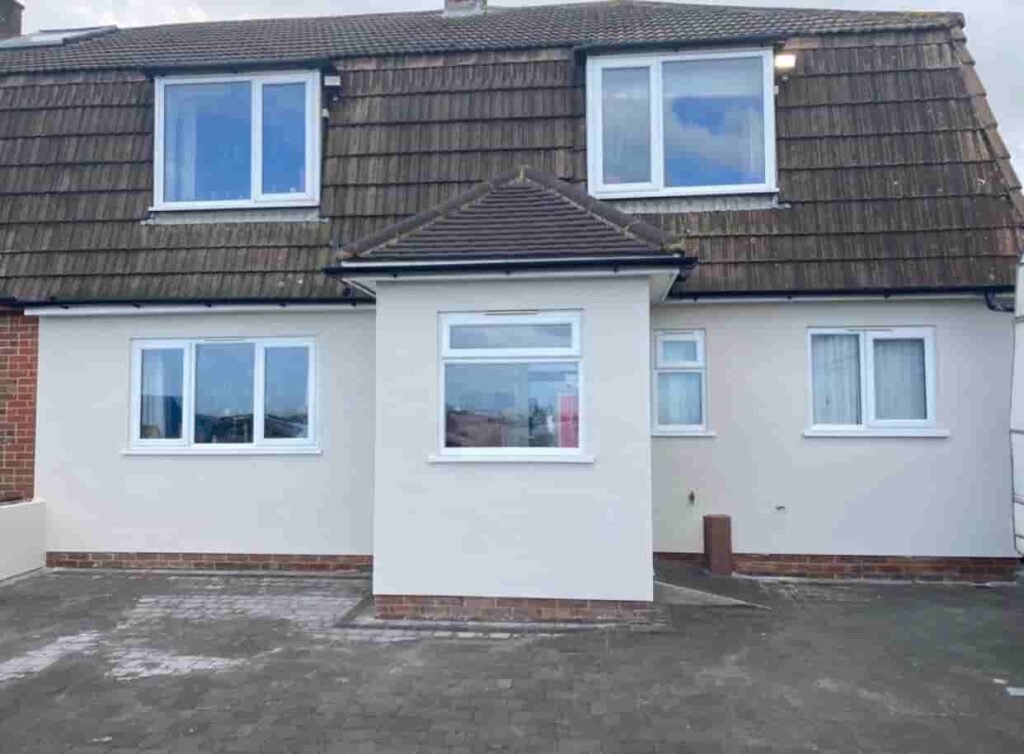
A roof can develop problems for many reasons, including natural ageing, weather exposure and individual material failure. However, some roofing problems can be traced back to the way previous work was carried out. Incorrectly positioned materials, poorly formed junctions, unsuitable detailing or repeated localised repairs can all affect how effectively the roof performs as a complete system.
When these issues are confined to one small area, targeted repairs may be sufficient. The situation becomes different when workmanship problems are widespread, have affected several roof components or have resulted in repeated leaks and recurring defects. In these circumstances, installing a new roof can provide an opportunity to correct the underlying construction rather than continuing to repair individual symptoms.
For homeowners in Kingswinford, Staffordshire, the important question is not simply whether previous roofing work was imperfect, but how extensively it has affected the current performance of the roof.
When Can a New Roof Resolve Problems Left by Previous Roofing Work?
A new roof can correct workmanship-related problems when the existing covering needs to be removed and the roofing system reconstructed correctly.
This provides access to areas that are normally hidden beneath tiles, slates or other covering materials. The condition of the underlying construction can be assessed, unsuitable details can be addressed and the new roof can be installed as one coordinated system.
However, complete replacement should not automatically be assumed to be necessary. The extent and cause of the existing problems should be established first.
What Types of Previous Workmanship Can Cause Roofing Problems?
Roofing relies on many components working together.
Even when the main covering appears acceptable, problems can develop if important details were not constructed appropriately. Potential weaknesses can include:
- poorly positioned tiles or slates
- inadequate or inconsistent fixing
- incorrectly formed roof junctions
- ineffective flashing details
- unsuitable work around valleys
- poorly finished ridges or verges
- inadequate transitions between different roof sections
- repeated repairs that have created an inconsistent covering
- underlying materials that were not installed correctly
The effect depends on the location and extent of the weakness. Some problems remain localised, while others influence a much larger section of the roof.
Repeated Leaks Can Indicate an Unresolved Underlying Problem
One of the clearest reasons to investigate previous workmanship is a leak that repeatedly returns.
The internal symptom may disappear after one repair, only for moisture to appear again nearby during later rainfall. When this happens repeatedly, it can indicate that the original cause has not been fully addressed.
Water can also travel beneath roofing materials before becoming visible inside the property.
As a result, several apparently different leaks may sometimes be connected to the same poorly formed junction or wider weakness within the roof covering.
Previous Repairs Can Sometimes Treat Symptoms Rather Than Causes
A repair can be perfectly appropriate when the defect is accurately identified and localised.
Problems arise when work repeatedly concentrates on the latest visible symptom without determining why the defect developed.
For example, replacing a slipped tile may restore the immediate opening, but if surrounding materials are also inadequately secured, further movement can occur elsewhere.
Over time, a roof can accumulate numerous individual repairs without the underlying weakness ever being properly resolved.
Several Different Problems Can Share the Same Origin
Workmanship-related roofing problems do not always appear in one obvious location.
A poorly constructed section can potentially contribute to water ingress, displaced materials and deterioration around adjoining details. These may initially look like separate defects.
This is why the pattern of roofing problems matters.
If several faults continue developing within the same general area, assessing that section as a complete system can provide more useful information than treating each symptom independently.
Incorrect Falls or Levels Can Affect Water Management
Roofs are designed to manage rainfall through carefully planned slopes, overlaps and drainage routes.
Where construction does not allow water to move as intended, particular areas can become vulnerable.
Problems around valleys, junctions and other drainage details can be especially significant because these locations may handle concentrated water during rainfall.
A new roof provides an opportunity to establish appropriate construction and detailing rather than attempting to compensate indefinitely for an unsuitable existing arrangement.
Poorly Installed Flashing Can Create Persistent Leaks
Flashing is essential around vulnerable roof junctions.
If it has been installed incorrectly, water may find a route behind or beneath the surrounding materials. The resulting leak may then appear some distance away from the actual defect.
Repeatedly applying attention to the internal leak location will not necessarily solve the problem.
Where flashing defects are localised, they may be repairable without replacing the complete roof. Where they form part of broader workmanship issues, their condition should be considered alongside the rest of the roofing system.
Tile and Slate Alignment Matters
Roof tiles and slates rely on correct positioning and overlap.
If materials have been installed inconsistently, the roof may contain areas where weather protection is less dependable. Problems can become particularly noticeable during wind-driven rain, when water approaches the covering differently from ordinary rainfall.
Poor alignment can also make later repairs more difficult because replacement materials need to integrate with an already inconsistent layout.
Where widespread installation problems exist, renewing the covering can restore a more coherent arrangement.
Fixings Can Influence Long-Term Roof Stability
Tiles and slates need appropriate fixing so that they remain secure throughout normal weather conditions.
If fixing has been inconsistent, sections of the roof may gradually develop movement. One displaced material may initially appear to be an isolated problem, followed later by similar defects elsewhere.
Repeated movement should therefore prompt consideration of why roofing materials are becoming unstable.
When fixing problems affect a substantial proportion of the covering, replacement can allow the new materials to be secured consistently across the roof.
Poorly Executed Junctions Can Affect Several Roof Areas
Junctions are among the most technically important parts of a roof.
Different slopes and materials need to meet while continuing to direct rainfall away from vulnerable areas. If these details were not formed correctly, they can become recurring points of water ingress.
The resulting symptoms may affect more than one internal location.
Correcting the junction properly can sometimes resolve several apparently unrelated problems at once.
A Patchwork of Previous Repairs Can Make Diagnosis More Difficult
Older roofs sometimes contain numerous repairs completed at different times.
Different materials, fixing methods and repair techniques can create a complicated surface where it becomes increasingly difficult to determine which components are original and which have been altered.
This does not automatically mean the roof requires replacement.
However, if problems continue appearing throughout a heavily repaired covering, assessing the overall reliability of the roof becomes increasingly important.
When Are Further Repairs Still Appropriate?
Previous workmanship problems do not automatically justify a new roof.
Targeted repairs may remain appropriate when:
- the defect is clearly identifiable
- the problem is confined to a limited area
- surrounding roofing materials remain secure
- the majority of the roof is performing correctly
- the underlying construction remains dependable
- the problem can be corrected without disturbing large areas of serviceable roofing
In these circumstances, there may be no practical reason to replace sound sections of the roof.
The decision should be based on condition rather than simply the existence of earlier workmanship issues.
When Does Roof Replacement Become More Relevant?
Replacement becomes more relevant when defects are widespread or when previous workmanship has affected the reliability of the roof as a complete system.
This may be the case where leaks repeatedly occur in different locations, large areas of roofing materials are poorly installed, numerous previous repairs have failed to provide stability or important roof details require substantial correction.
The frequency of new problems is also useful information.
A roof requiring increasingly regular attention may no longer be providing dependable overall performance, even though each individual defect appears repairable when viewed alone.
Removing the Existing Covering Reveals Hidden Conditions
One advantage of roof replacement is the opportunity to examine areas that cannot normally be seen.
Once the existing covering is removed, the underlying roof can be inspected more thoroughly. This can reveal whether previous problems were limited to the external materials or whether other components have also been affected.
This information allows the new roof to be constructed around the actual condition of the property rather than assumptions based only on visible symptoms.
A New Roof Creates One Consistent Roofing System
Repeated alterations can leave a roof containing sections installed at different times and in different ways.
Replacement provides an opportunity to establish a more consistent system across the complete roof.
Materials, fixings, overlaps and important weathering details can be planned together rather than individual repairs having to accommodate weaknesses left by previous work.
The benefit is not simply that the roof looks newer. The objective is to restore reliable performance through correct construction.
Replacement Can Correct the Cause Rather Than Continue Managing Symptoms
The strongest reason to consider a new roof is when continued repairs are no longer addressing the fundamental problem.
If workmanship defects are widespread, repairing one location may simply be followed by another problem elsewhere.
Replacement can allow the underlying issues to be addressed systematically.
This does not mean that a new roof should be recommended whenever previous workmanship is discovered. It means replacement becomes a more logical consideration when correcting the existing roof through isolated repairs would leave significant weaknesses in place.
Existing Problems Should Be Understood Before Replacement Begins
Even when a new roof is likely to be appropriate, diagnosis still matters.
Understanding why the old roof has been leaking or deteriorating provides useful information for the new installation. Simply removing the existing covering without considering the causes of previous failures risks overlooking important details.
At Kingswinford Roofing Repairs, the condition of the existing roof can be assessed as a complete system, including the pattern of previous repairs and the areas where recurring problems have developed.
This helps establish what needs to be corrected rather than assuming that replacement alone automatically solves every issue.
Roof Age and Workmanship Should Be Considered Separately
An older roof can contain good workmanship but materials that have naturally reached an advanced stage of deterioration.
Likewise, a relatively established roof can experience problems because particular sections were poorly constructed rather than because all of its materials have deteriorated.
Separating these factors helps determine the most appropriate response.
The question should be whether the existing roofing system remains capable of being repaired reliably, not simply how old it is or how many previous alterations are visible.
Professional Assessment Helps Avoid Unnecessary Replacement
The purpose of a roof assessment is not automatically to justify larger-scale work.
A professional inspection can identify which defects are genuinely connected with previous workmanship, how extensive they are and whether they can be corrected through targeted repairs.
Where the remainder of the roof is sound, retaining serviceable materials may be entirely appropriate.
Where weaknesses are widespread, the same assessment can demonstrate why continuing with isolated repairs may provide diminishing benefit.
For homeowners in Kingswinford, Staffordshire, this provides a clearer basis for deciding between further repairs and roof replacement.
A Correctly Planned New Roof Can Restore Dependable Performance
When replacement is genuinely required, the aim should be to resolve the weaknesses that have undermined the existing roof.
That means considering the complete roofing system rather than concentrating only on the finished appearance.
Appropriate materials, secure fixing, accurate alignment and carefully constructed junctions all contribute to dependable weather protection.
A new roof therefore offers its greatest value when it is used as an opportunity to correct the reasons the previous system was failing.
Conclusion
A new roof can correct problems caused by previous workmanship, particularly when those problems are widespread, recurring or built into important parts of the existing roofing system. Removing the old covering can provide access to hidden areas, allow unsuitable details to be corrected and enable the new roof to be installed as one consistent system.
However, previous workmanship problems do not automatically mean that complete replacement is necessary. Localised defects can often be repaired successfully when the surrounding roof remains sound. The correct approach depends on the extent of the problem and whether the existing roof can still provide reliable performance after appropriate remedial work.
If your roof in Kingswinford, Staffordshire has recurring problems or you are concerned about the quality of previous roofing work, contact Kingswinford Roofing Repairs. We can assess the existing condition, identify the underlying cause of the defects and recommend an appropriate approach based on what the roof genuinely requires.
Call us on: 01384 319 097
Click here to find out more about Kingswinford Roofing Repairs
Click here to complete our contact form and see how we can help with your roofing needs.